
By Ted Lenzie
“When it roars, go indoors” is a perfect rule for urban areas, but what happens when you are miles into the backcountry and there are no indoors to be found?
If you travel in the wilderness long enough, you will eventually have a thunderstorm story. Thunderstorms are beautiful, thrilling, and incredibly dangerous. Like avalanches, the risks associated with thunderstorms can be mitigated through education, pre-trip planning, route selection, and knowing the right Wilderness First Aid (WFA) protocols.
There is a deep science behind thunderstorms and lightning. If you want to dive into the meteorology, the National Oceanic and Atmospheric Administration (NOAA) is an excellent starting point. But for the backcountry traveler, here are the essential, practical basics.
Prevention: Master Your Pre-Trip Planning
Your best defense against a thunderstorm is avoiding it entirely.
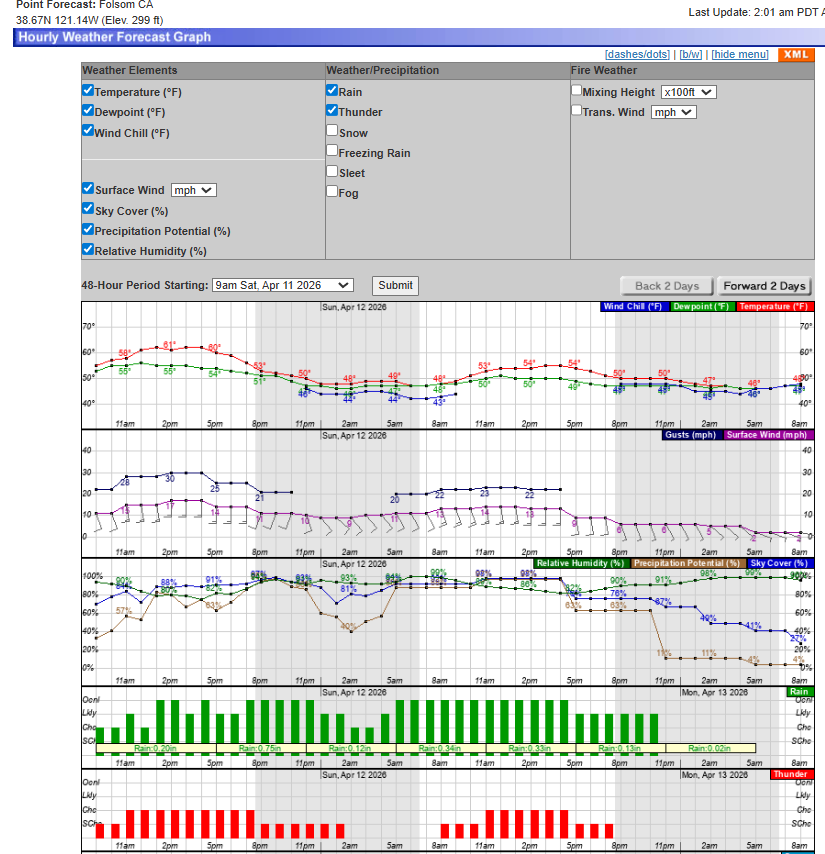
For day trips or short backpacking excursions, the National Weather Service (NWS) is your first stop. Simply click on your travel location on the map to read the forecast.
Pro tip: Click the graphical forecast icon to see an hour-by-hour breakdown of severity, timing, rain, wind, and hail. This timing is critical for planning when to cross exposed areas.
If you are out for weeks or months, devices like a Garmin inReach can pull weather data via satellite. However, technology fails, and you must rely on your own daily observations:
- Watch the pattern: Has it been clear every day, or are clouds building in the afternoon?
- Track the progression: Weather often changes over a few days. You might see a clear day, followed by a day of morning clouds, culminating in a violent afternoon storm on day three.
- Plan around the sky: Use these observations to time your travel. If afternoon storms are the pattern, ensure you cross passes, climb peaks, or traverse exposed ridges well before noon.
Terrain Selection: High and Low-Risk Areas
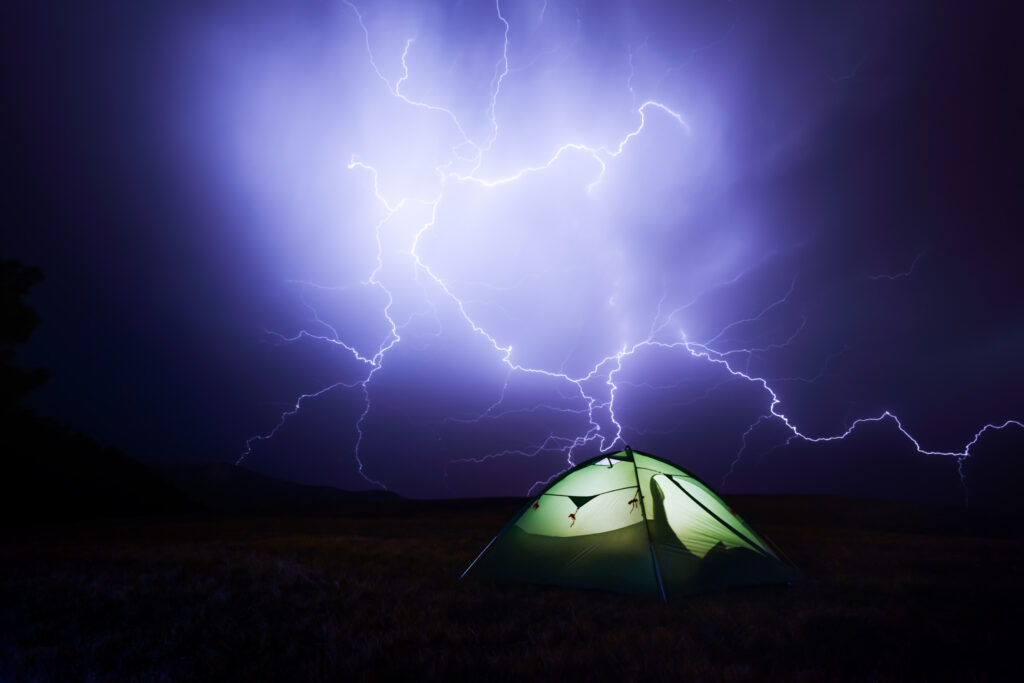
Most hikers know that being on a peak or ridge during a storm is a bad idea due to the risk of a direct strike. However, ridges and peaks are also prime locations for ground currents and side flashes, which are actually the most common ways people are struck and injured.
High-Risk Areas to Avoid:
- Peaks, ridges, and open passes
- Bodies of water (kayaking or swimming)
- Shorelines where you are the highest point
- Open meadows
- Under isolated, lone trees
- Shallow caves or rock overhangs (lightning can travel through the rock and bridge the gap directly through your body)
Lower-Risk Areas to Seek:
- Deep depressions in the terrain
- Large, uniform groves of trees (avoid the tallest tree in the grove)
Secondary Risks: Fire and Floods
Lightning brings secondary hazards. Dry lightning can easily spark wildfires; if you smell sudden smoke or see an unexplained glow on the horizon at night, be prepared to alter your route. Additionally, avoid camping directly next to creeks or in dry riverbeds, as storms miles upstream can trigger unexpected flash floods.
Human-Made Structures
What about human-made structures? What is safe and what isn’t?
Structures such as metal-wired fences can allow electricity to travel along the wire. Towers, such as communication towers, power poles, and weather stations, can be struck, and if you are nearby, they can transfer the shock to you.
Safer structures include being inside a building or a vehicle. If you are able to reach one, be sure to close all doors and windows.

Group Dynamics and the “Lightning Stance”
When danger strikes, human nature tells us to herd together. In a thunderstorm, you must do the exact opposite.
Spread out. Open a gap of at least 20-50 feet (roughly the length of a large bus) between each group member. This minimizes the risk of a single strike traveling through the ground and injuring the entire group, ensuring there are healthy rescuers available if someone is hit.
The Lightning Stance: Your primary goal is to keep moving toward safer terrain until the very last second. Do not stop to crouch just because you hear thunder. However, if a strike is actively imminent—your hair is standing on end, your skin tingles, or your metal gear begins to buzz—and you have no shelter, you must minimize your footprint.
Place your feet tightly together. If a ground strike hits nearby, electricity can travel up one leg, pass through your major organs, and go down the other leg, potentially causing cardiac arrest. By keeping your feet touching, the current is more likely to pass simply from one foot to the other.
Wilderness First Aid Response
If someone is struck by lightning, immediate action is required. Lightning victims do not carry an electrical charge—it is completely safe to touch and treat them.
Often, we only think of the immediate threat of cardiac or respiratory arrest (which requires immediate CPR). However, lightning can cause a cascade of other injuries: neurological damage, severe burns, ruptured eardrums, or blindness. Furthermore, the concussive blast of the strike or a subsequent fall can cause severe blunt-force trauma. Evacuation is always mandatory for a lightning strike victim, as internal injuries may not be immediately apparent.
Near-Misses: Learning from the Field
Think back to a close call you have had. Is there a lesson hidden in it? Consider these three scenarios:

Granite Peak, Montana
Two people were in Montana trying to climb its highpoint, Granite Peak. This area was not their usual area to climb, so they were unfamiliar with the weather patterns. As they approached the summit, the sky rapidly closed in and the distant thunder began to roar. In no time it was on top of them, but the exit was difficult along the steep, narrow, technical ridge. They descended as fast as it was safe, but once it began to hail, the sheer drop and slippery rock made the route too dangerous to continue. Forced to separate, each person sat on a coiled climbing rope waiting for the storm to pass. Though not a perfect solution, the dry rope acted as an improvised insulator between them and the electrically conductive wet ground. It was a terrifying experience to be trapped in the open, at altitude, without a safe retreat.
Virginia Peak, Sierra Nevada
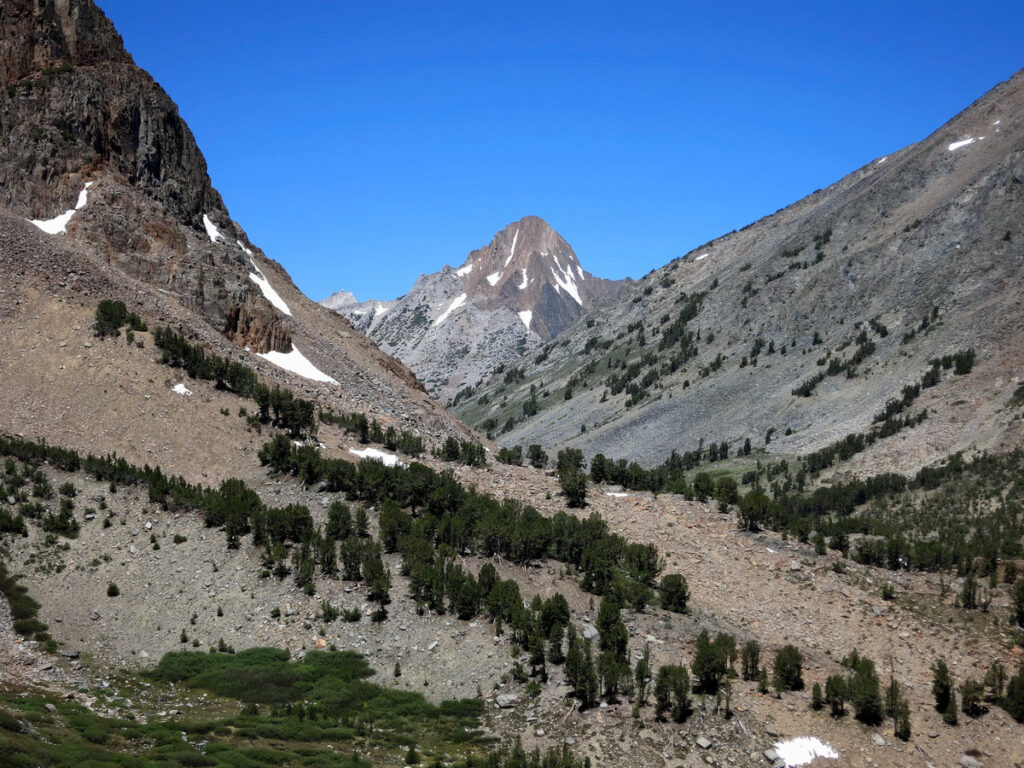
A group was heading to Virginia Peak in the Sierra Nevada. After a long day of backpacking, the sky was clear without a sign of bad weather. The group decided to go for the peak in the late afternoon. Unknown to them, an isolated thunderstorm was approaching from the north, but the terrain did not allow them to see the clouds until they were on the ridge, and suddenly the storm was upon them. With lightning strikes all around, their bodies began to tingle, their hair stood on end, and the smell of ozone created after each flash was very strong. The thunder and lightning strikes were simultaneous, meaning the storm was directly overhead with zero margin for error. They scrambled down as fast as they could. Each going at their own unusually fast pace, hail began to fall, and while descending the steep open bowl, nowhere seemed to be safe. Then suddenly, the storm dissipated and the sky opened up. Now the new risk was getting down the slippery technical sections. As the temperature significantly dropped, hypothermia became a secondary, but equally life-threatening, emergency for these rain-soaked climbers.
Pinchot Pass, John Muir Trail
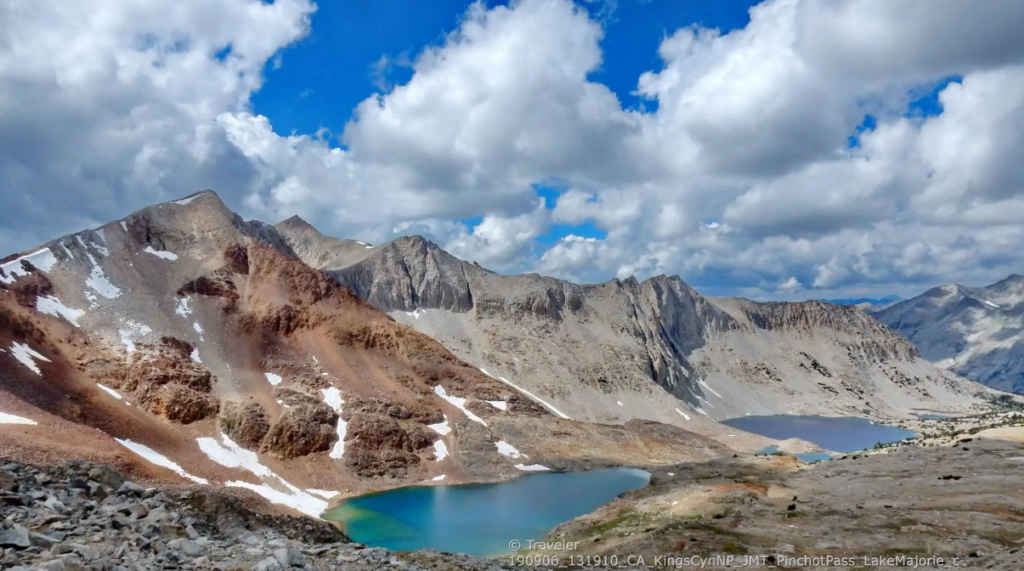
A group on the John Muir Trail was hiking all day in unusually hot weather. The guide was watching the skies and saw the clouds building, and the heavy fatigue of the group made it clear they would not safely make their goal of camping on the other side of Pinchot Pass. Both factors made it seem best to stop before the pass and make camp. Instead of pushing over the exposed ridge, the group relaxed in the partial sun near a lake, tucked safely inside a large, uniform grove of trees. Suddenly, “BOOM.” This continued the rest of the evening until after sunset when the temperatures began to cool and the thunderstorms lost their energy. There was no rain or hail, just flashes and long crackling thunder. The group was in the safest place possible—protected by the uniform height of the surrounding trees rather than being the highest point themselves—but there was a nervous excitement after each flash and the subsequent roar.
Conclusion: Respect the Roar
Thunderstorms are an inevitable part of the backcountry experience, but they do not have to be a primary danger. By mastering your pre-trip planning, maintaining a constant awareness of the sky, and knowing what to do when the weather turns, you can safely navigate these powerful systems.
Remember that the mountains and trails will always be there tomorrow. There is no shame in turning back early, altering your route, or setting up camp short of your daily goal to avoid an exposed pass or ridge. The most crucial wilderness skill isn’t knowing how to survive a lightning strike—it is having the humility and situational awareness to avoid being in the strike zone in the first place.
However, even with the best prevention, emergencies happen. That is why formal Wilderness First Aid (WFA) training is a critical piece of your backcountry toolkit. If someone is struck, delayed rescue is a reality. Knowing exactly how to assess a victim, manage cardiac emergencies, and treat secondary trauma or hypothermia equips you to handle the worst-case scenario. Respect the weather, trust your observations, and ensure your first aid skills are ready before you hit the trail.

About the Author
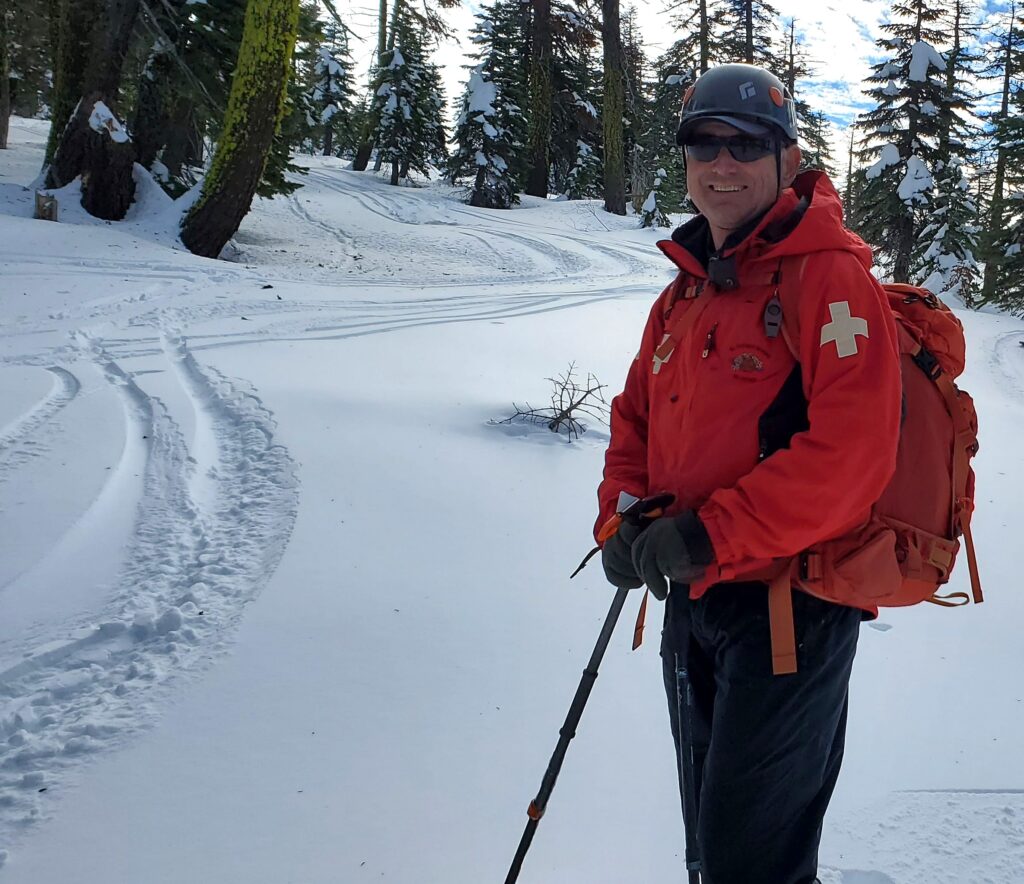
Ted Lenzie is a veteran ski patroller, guide, and outdoor educator with years of experience in wilderness navigation, rescue, and backcountry leadership. He believes every trip is a learning opportunity—and that preparation, communication, and adaptability are the keys to staying safe outdoors.